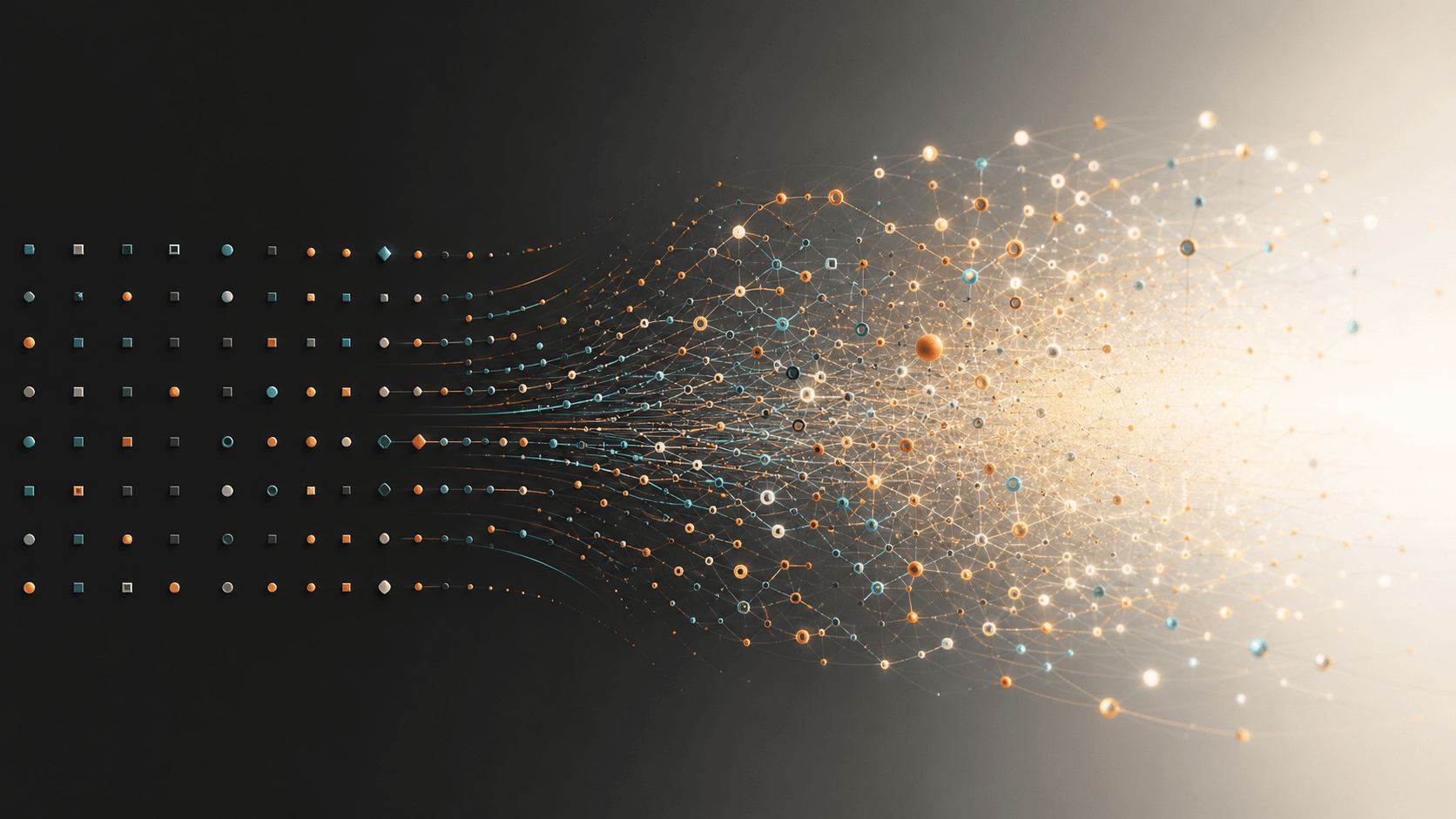
At the beginning of 2026, Elon Musk posted two unusually direct predictions: “We have entered the Singularity” and “2026 is the year of the Singularity.” Both were replies to people describing how coding agents had changed their sense of what one person could accomplish. Before deciding whether Musk is right, we need to separate assistants, agents, artificial general intelligence and the singularity, because they are not different names for the same thing.
What is the AI singularity?
In the simplest terms, the AI singularity is a hypothetical point when AI begins driving technological progress so quickly that people can no longer reliably predict what comes next. It does not just mean “AI becomes very capable.” It means the pace and scale of change themselves have moved beyond ordinary human forecasting. Understanding whether we are approaching that point requires separating it from several related ideas.
The words we keep mixing up
An AI assistant waits for a request and responds. It can explain a contract, suggest dinner recipes, summarise a meeting or help debug code. The person remains in charge of the sequence: ask, inspect the answer, then decide what happens next.
An AI agent receives a goal and works through several steps towards it. It can choose tools, inspect results and adjust its approach. A coding agent can read a repository, change files, run tests and prepare a pull request. A research agent can compare sources and produce a report. The AI has moved from answering a question to performing part of the work.
That is also close to how OpenAI defines an agent: a system that independently accomplishes tasks on someone’s behalf by using a model, tools and instructions. The last word matters. An agent is still operating inside a job and a set of boundaries that somebody else provided.
Artificial general intelligence, usually shortened to AGI, is a much larger claim, with no single accepted test. OpenAI’s Charter describes AGI as highly autonomous systems that outperform humans at most economically valuable work. A Google DeepMind framework separates breadth from depth: how many tasks a system can handle, and how well it performs them. Both go far beyond excellence at one workflow.
Superintelligence goes further. It would substantially exceed the best human ability across most relevant areas. It would not just write code faster than a developer, but outperform us at the research, planning and invention that move fields forward.
Then comes recursive self-improvement: an AI system contributes to building a more capable AI system, which can then produce a still better successor. If every turn of that loop becomes faster and more effective, progress could accelerate beyond the pace that human researchers and institutions can follow.
The technological singularity is the proposed result of that accelerating loop. It is not simply a very good chatbot, an autonomous agent or even necessarily the day AGI arrives, but the broader threshold described above.
A map of the ideas, not a release schedule. Progress through one stage does not guarantee the next.
Why AI already feels different
The familiar AI interaction was a chat window: write a prompt, receive text, copy the useful part somewhere else. Today, an agent can work inside the places where the task actually happens.
In software development, I can describe a change and let an agent inspect the project, find the relevant files, plan, implement and run the repository’s checks. It can prepare a pull request while another AI reviews the changes. Outside engineering, a meeting can become a summary and action list, documents can become a research brief, and notes can become a first draft checked against a style guide.
We have already covered our connected, human-approved AI workflow, from meeting notes and tickets to development and review. What matters here is not the specific collection of products. Those will change. The durable shift is from generating individual answers to delegating clearly defined outcomes.
That shift is significant enough to feel like a threshold. It compresses work that used to require several tools, handovers and stretches of focused time. It also explains why a claim such as Musk’s feels plausible even before we examine it carefully. From the user’s perspective, a system that takes a request and returns completed work can look much more independent than the machinery behind it really is.
An idea older than today’s AI
The central singularity argument predates modern language models by decades. In 1965, statistician I. J. Good described an “ultraintelligent machine” that could outperform any person at intellectual work. Designing intelligent machines is itself intellectual work, he reasoned, so such a machine could help design something better than itself. That possibility became the foundation of the intelligence explosion argument.
Computer scientist and science-fiction author Vernor Vinge gave the idea its modern framing in a 1993 paper published by NASA. He argued that greater-than-human intelligence would create a change as disruptive as the rise of humanity itself. Ordinary forecasting would stop being reliable because the main source of invention would be more capable than the forecaster.
Vinge expected greater-than-human intelligence within thirty years. That deadline passed, which is a useful reminder: a compelling mechanism does not give us a dependable date.
Ray Kurzweil later brought the idea to a much wider audience. His version combines increasingly capable non-biological intelligence, faster technological progress and closer integration between humans and machines. He places the singularity in 2045, while describing a stage where AI can access its own design and improve through increasingly rapid cycles.
Musk’s posts bring that long-running debate into the present. On 4 January 2026, he wrote “We have entered the Singularity” and then “2026 is the year of the Singularity”. They are memorable claims, but the posts do not define a test or provide evidence that a self-accelerating intelligence loop has begun. I read them as predictions, or perhaps as a description of how dramatic the current acceleration feels, rather than as proof that the historical definition has been met.
What would have to change
Current systems already contain pieces that earlier singularity thinkers imagined. Google DeepMind says its AlphaEvolve agent found improvements for AI training processes, including the models underlying AlphaEvolve itself. Coding agents write AI software, analyse experiments and design evaluations. None of that is trivial.
But “AI contributed to improving AI” is not the same as an intelligence explosion. Human teams still choose the objectives, design the experiments, supply computing power, decide which results count and release the next system. The process can become much faster without becoming self-sustaining or beyond human control.
The difference is easier to see by comparing the claims directly:
Question
AI agents today
A singularity-level claim
How broad is the capability?
Impressive but uneven and dependent on context
Beyond top human performance across broad areas
How independently can it work?
Within supplied goals, tools, permissions and checkpoints
Sustained progress without constant human coordination
Can it improve AI?
Assists people with research, code, data and evaluation
Drives an accelerating cycle of increasingly capable successors
Who checks the result?
People and external tests remain essential
The system can reliably evaluate improvements beyond human expertise
How quickly does the world change?
Fast, but still limited by organisations and infrastructure
Fast enough that ordinary prediction and adaptation break down
This table is not a universal checklist. There is no official singularity certification. It is a practical way to avoid moving the definition every time a model completes an impressive demonstration.
There are physical constraints too. Better intelligence does not instantly produce more chips, electricity, laboratories or robots. Ideas still need experiments; infrastructure needs materials and construction. Regulation, economics and public acceptance also affect what gets deployed. Software can improve at digital speed while the physical world cannot.
Have we reached it, or is this only the beginning?
I do not think the evidence supports declaring that the full singularity has arrived. We have not seen a system independently drive a runaway cycle of intelligence improvement, and people still coordinate the most important parts of AI development. But a simple “no” now feels too confident in the other direction.
The singularity is often imagined as a single dramatic break: one day humans lead technological progress, the next day machines move too quickly for us to follow. It may not happen that way. In “The Gentle Singularity”, Sam Altman argues that the transition could arrive gradually, through systems that already perform useful cognitive work and help researchers build better AI. He calls today’s tools a “larval version of recursive self-improvement”, while distinguishing them from a system that autonomously rewrites and upgrades itself.
We are clearly entering the agent era. AI systems are beginning to carry complete, defined pieces of work instead of waiting at every individual step. The human role moves upward: from producing each deliverable to defining the outcome, providing context, setting permissions, reviewing evidence and accepting responsibility.
My interpretation is that this may also be the opening phase of something larger. AI is helping develop AI, capable systems are becoming easier to deploy, and the time between a new capability and its everyday use is shrinking. None of this proves that an intelligence explosion will follow. It does mean that we may only recognise the start of the singularity in hindsight, after several apparently manageable advances have formed an accelerating loop.
That uncertainty is the most honest answer I can give. We have stronger evidence for an agent era than for a singularity, but the boundary between “before” and “during” may be much less visible than the word suggests.
What could the singularity mean for everyday life?
Predicting life beyond a point defined by unpredictability is an obvious contradiction. Still, forecasts from researchers and technology leaders are useful when they are treated as scenarios rather than promises. They show where the effects might appear first and what would determine whether ordinary people benefit from them.
Possible effects of much more capable AI. The outcome would depend on access, safety, policy and the choices people make.
A singularity-level acceleration would make that distinction harder to preserve. Agents could take on not only isolated tasks but entire chains of analysis, coordination and production. Some roles could disappear, many could be redesigned, and new ones could emerge around goals, judgement, trust and responsibility. The transition would not feel abstract to someone whose income or professional identity depended on the old arrangement. How quickly people can retrain, and how productivity gains are shared, would matter as much as the technology itself.
Science and healthcare could move much faster
In “Machines of Loving Grace”, Dario Amodei imagines powerful AI compressing 50 to 100 years of progress in biology into 5 to 10 years. He presents this as a speculative forecast, not a schedule, and acknowledges limits such as experiments, physical production and clinical trials.
For an ordinary person, the meaningful result would not be a smarter model on a benchmark. It could be an earlier diagnosis, a treatment developed in years rather than decades, more personalised care or better support for mental health. Intelligence could accelerate discovery, but hospitals, regulation, manufacturing and equal access would still decide who receives the benefit.
Education and everyday services could become personal
A capable agent could act as a tutor that understands how one person learns, or as an assistant that handles research, forms, schedules and public services across different systems. People could create software, analyse data or explore a new field without first mastering every specialised tool.
That convenience would come with serious questions. A system trusted with our work, health, finances and decisions would hold unusually detailed knowledge about our lives. Privacy, the right to challenge its conclusions and the option to remain in control would become practical requirements, not fine print.
Greater abundance would not guarantee a fairer world
Many optimistic singularity forecasts expect cheaper expertise, faster innovation and far higher productivity. Those gains could improve living standards. They could also concentrate wealth and influence among the organisations that control the strongest models, computing infrastructure and data.
Work provides more than output: it provides income, structure, status and community. Even if new forms of activity eventually replace old jobs, the transition could be deeply uneven. The world after a technological breakthrough would still be shaped by political choices, ownership and access. More intelligence does not automatically produce better judgement about how its benefits should be distributed.
The important change may come before the singularity
The singularity is compelling because it suggests one enormous dividing line between human-led and AI-led technological progress. Real change is rarely so tidy. We may experience years of smaller thresholds in which AI takes on longer tasks, enters more professions and becomes harder to separate from ordinary work. That could remain an extended agent era, or it could turn out to have been the beginning of a gradual takeoff.
That is why I find the question useful even without a clean yes-or-no answer. It forces us to ask what these systems can actually do, which decisions we are prepared to delegate, how their work will be checked, who remains accountable when it fails and who benefits when it succeeds. We do not need to settle a prediction about 2026 or 2045 before addressing any of those questions.
Whether Musk’s statement ages as foresight, metaphor or simple overstatement, the transition beneath it is real. We have moved from asking AI for answers to asking it for outcomes, while AI increasingly contributes to the development of its successors. I would not call that proof of the singularity. I would call it a plausible opening chapter. That is already enough to change how we work, learn and decide.